
Apple iPhone 17 Pro
Key Highlights
-
iPhone 17 Pro Key Features
- RAM: 12GB
- Storage: 256GB, 512GB, 1TB
- Camera: 48MP + 48MP + 48MP
- Selfie: 18MP
- Display: 6.3 inches
- OS: iOS 26
- Chipset: Apple A19 Pro (3 nm)
- Connectivity: 5G, Nano-SIM, eSIM, Wi-Fi 7
- Battery: 3988 mAh
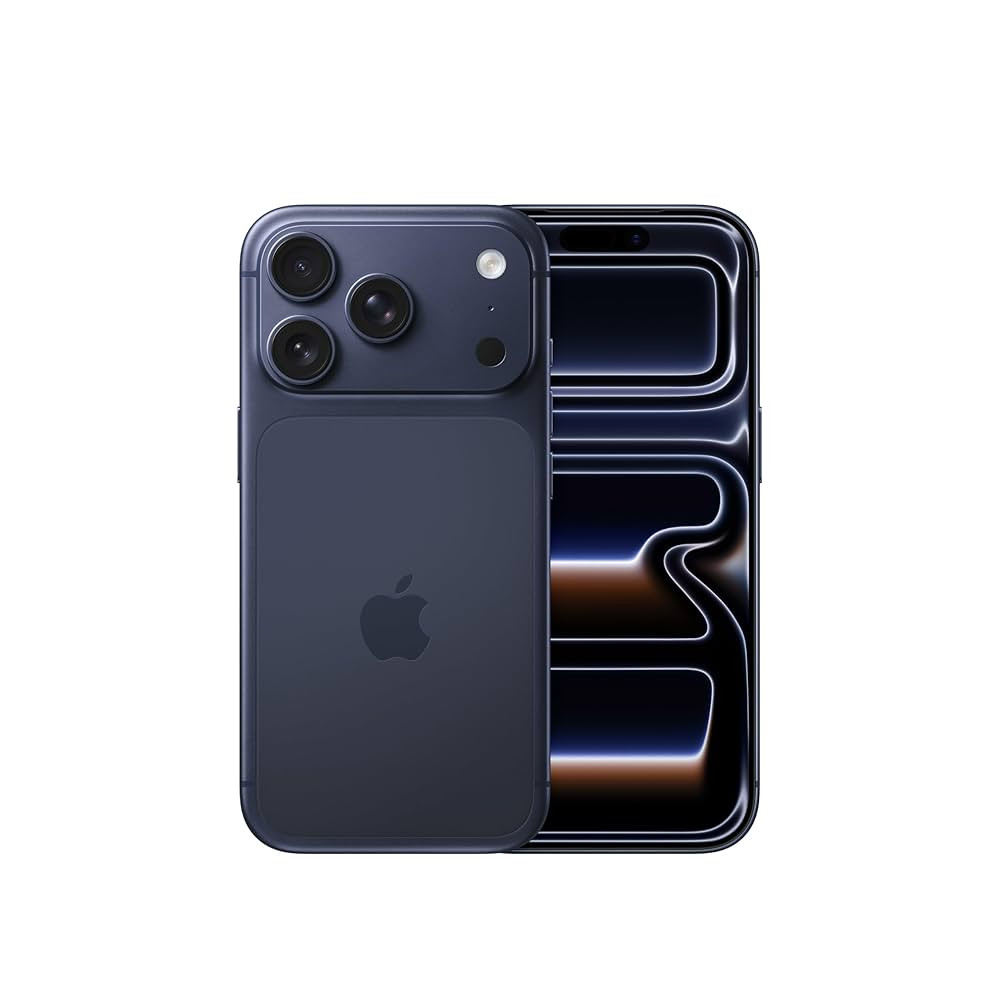
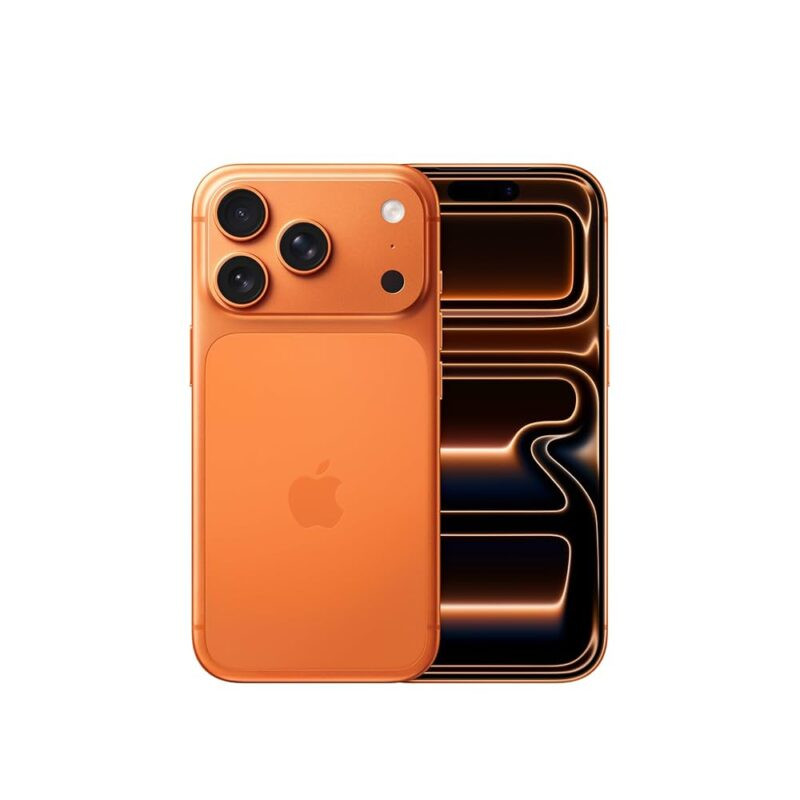
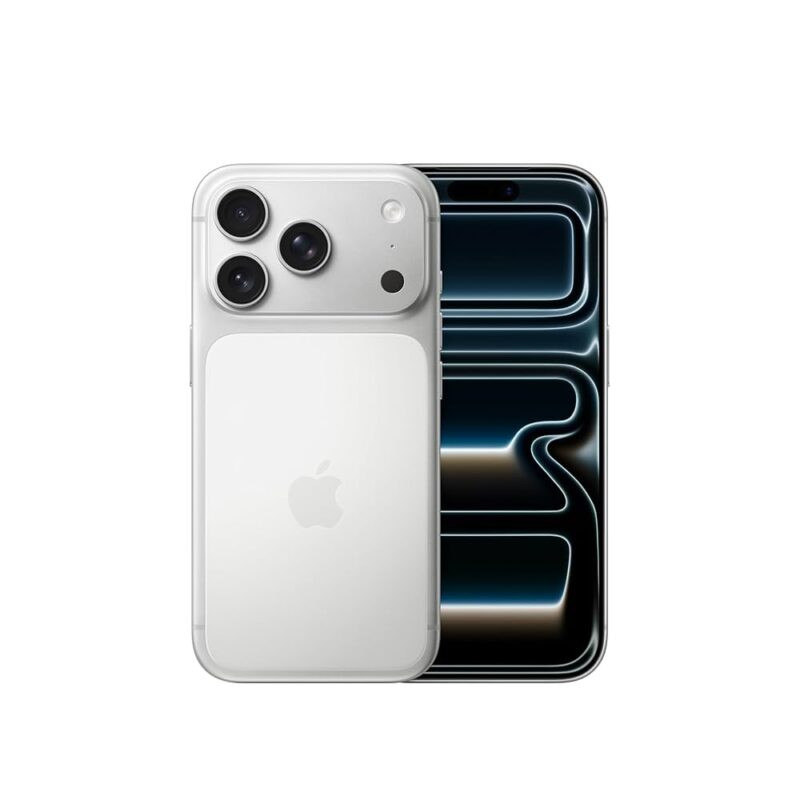
- Colors: Silver, Cosmic Orange, Deep Blue
KSh.500
Pay at your own pace
0% interest rates
AFTER full payment
-
Released in September 2025, the iPhone 17 Pro represents a significant evolution in Apple’s smartphone philosophy . This isn’t merely a spec bump or a iterative update—it’s a ground-up reimagining of what a “Pro” iPhone can be. From its bold new aluminum unibody design to its revolutionary triple-48MP camera system, the iPhone 17 Pro sets a new standard for the smartphone industry .https://sammertechnology.co.ke/
Apple has positioned the iPhone 17 Pro as “by far the most powerful iPhone we’ve ever made,” with Greg Joswiak, Apple’s Senior Vice President of Worldwide Marketing, calling it “a massive upgrade for our most demanding users” . The device arrives in three striking finishes—Silver, Cosmic Orange, and Deep Blue—with the vibrant Cosmic Orange representing Apple’s most daring color choice for a Pro model in years .
Design: Form Meets Function
The End of Titanium, The Rise of Aluminum
Perhaps the most significant design change in the iPhone 17 Pro is the complete departure from titanium. Apple has returned to a 7000-series aerospace-grade aluminum alloy unibody construction, a material choice that serves multiple purposes . While titanium offered premium aesthetics, aluminum provides superior thermal conductivity—a critical factor given the power of the A19 Pro chip inside.
The unibody design is forged from a single piece of aluminum, eliminating seams and creating a remarkably rigid structure. This construction method not only enhances durability but also contributes to the device’s premium feel. The aluminum frame is interrupted only by a glass panel on the rear—necessary for wireless charging—and the prominent new camera housing .
At 150.0mm (5.91 inches) in height, 71.9mm (2.83 inches) in width, and 8.75mm (0.34 inches) in depth, the iPhone 17 Pro is slightly larger than its predecessor . It weighs 204 grams (7.20 ounces), making it feel substantial without being cumbersome .
The Controversial Camera Plateau
The most immediately noticeable design element is the new camera arrangement. Gone is the square module of previous generations. In its place is what Apple calls the “camera plateau”—a raised horizontal bar that spans the entire width of the phone’s upper back . The three lenses sit on the left side, while the flash and LiDAR scanner occupy the right side.
This design has generated significant discussion, with some users initially calling it “ugly” upon announcement . However, in practice, the horizontal layout serves a practical purpose: it provides additional physical space for the upgraded telephoto lens system while improving the phone’s balance when laid flat .
The camera plateau features hard edges, which some users have reported as being susceptible to scratching—a phenomenon dubbed “Scratchgate” in early user forums . Apple has not officially addressed these concerns, but the company’s use of Ceramic Shield on both the front and back of the device suggests a commitment to overall durability .
Dual Ceramic Shield Protection
For the first time, Apple has applied Ceramic Shield technology to both the front display and the rear glass . Ceramic Shield 2, as Apple calls the latest iteration, offers three times the scratch resistance of previous models and four times better crack resistance than standard glass backs . The material incorporates nano-ceramic crystals embedded in the glass matrix, creating a barrier that disperses impact energy more effectively than traditional smartphone glass.
An anti-reflective coating further enhances the durability equation while improving outdoor visibility—a feature that pairs perfectly with the display’s 3,000-nit peak brightness .
Color Options
The iPhone 17 Pro is available in three distinctive finishes:
Silver: A timeless, minimalist option that highlights the aluminum unibody’s clean lines. This finish features a subtle metallic sheen that catches light beautifully while remaining understated.
Cosmic Orange: The hero color of the lineup, Cosmic Orange is a vibrant, saturated orange with subtle metallic undertones . It represents Apple’s boldest Pro color since the iPhone 12 Pro’s Pacific Blue, and early reviews have praised it as “a stunner” .
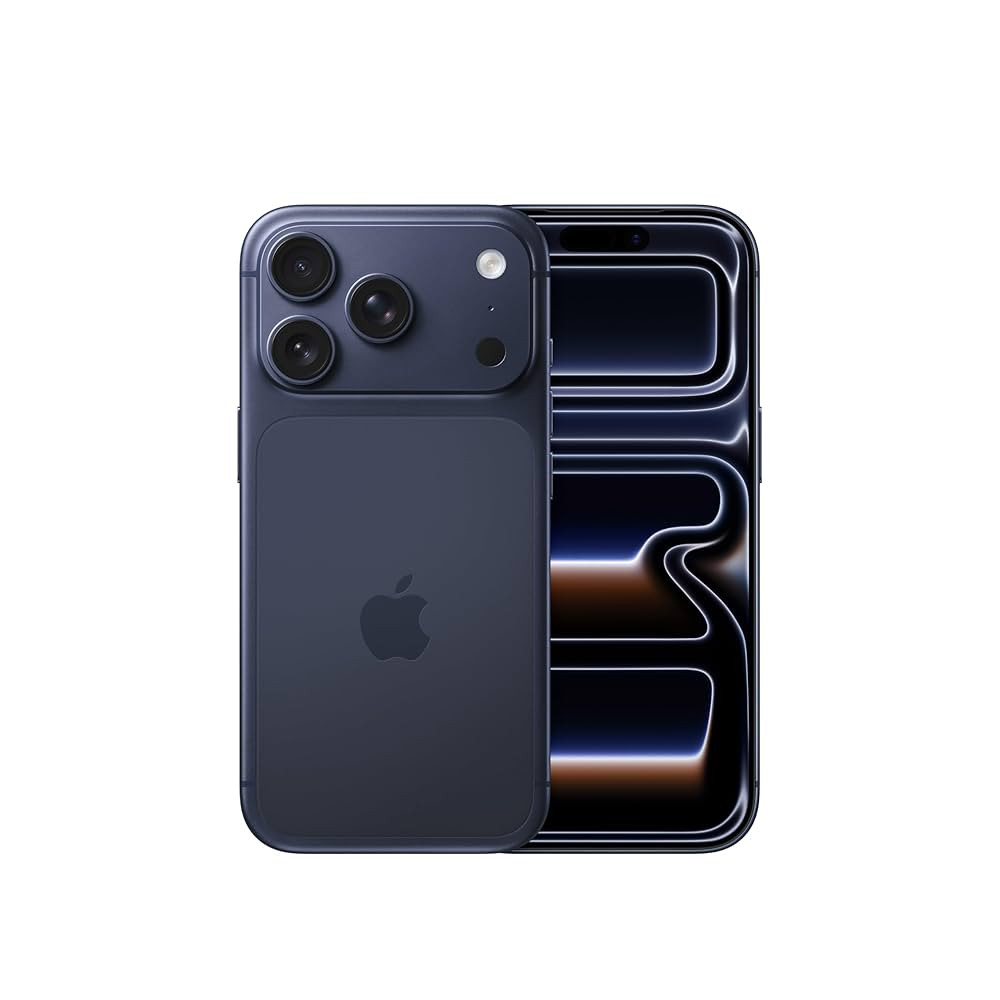
Deep Blue: A sophisticated, dark navy that appears almost black in low light but reveals rich blue tones in brighter conditions . This finish appeals to users who want something more distinctive than silver but less attention-grabbing than Cosmic Orange.
Durability and Environmental Considerations
The iPhone 17 Pro maintains its IP68 rating under IEC standard 60529, meaning it can withstand submersion in up to 6 meters of water for 30 minutes . This represents an improvement over previous generations, which were rated for 6 meters on the Pro Max but only 4 meters on the standard Pro model.
Apple has also made significant environmental strides with this generation. The iPhone 17 Pro contains 30% recycled content overall, including fully recycled cobalt in the battery and recycled gold plating in printed circuit boards . The packaging is 100% fiber-based and recyclable, continuing Apple’s push toward eliminating plastic from its product boxes .
Display: Super Retina XDR, Perfected
Technical Specifications
The iPhone 17 Pro features a 6.3-inch Super Retina XDR OLED display with a resolution of 2622 x 1206 pixels at 460 pixels per inch . When measured as a standard rectangle (accounting for the rounded corners), the diagonal measurement is 6.27 inches . The display supports HDR, True Tone, and the Wide Color (P3) gamut, ensuring accurate color reproduction across all content types.
ProMotion and Always-On Display
ProMotion technology remains a cornerstone of the Pro display experience, offering adaptive refresh rates from 1Hz to 120Hz . The LTPO (Low-Temperature Polycrystalline Oxide) panel can dynamically adjust refresh rates based on content—dropping to 10Hz for static content to save power, ramping to 120Hz for smooth scrolling and gaming, and settling at 24Hz or 30Hz for video playback.
The Always-On display functionality has been refined, showing the time, widgets, and Live Activities at a reduced brightness and 1Hz refresh rate . When combined with iOS 26’s new Lock Screen customization options, this feature provides glanceable information without significant battery drain.
Brightness and Outdoor Visibility
The iPhone 17 Pro’s display achieves class-leading brightness figures:
-
Typical maximum brightness: 1,000 nits
-
Peak HDR brightness: 1,600 nits
-
Peak outdoor brightness: 3,000 nits
-
This 3,000-nit outdoor peak represents a significant leap from the iPhone 16 Pro’s 2,000-nit maximum, making the iPhone 17 Pro exceptionally usable in direct sunlight . The minimum brightness of 1 nit ensures comfortable viewing in complete darkness.
Display Durability
The Ceramic Shield 2 front panel provides exceptional protection against drops and scratches. In testing, the display demonstrated significantly improved resistance to shattering compared to the iPhone 16 Pro, with Apple claiming “three times the scratch resistance” of previous models .
The display also features an improved fingerprint-resistant oleophobic coating and an anti-reflective coating that reduces glare by up to 25% compared to the iPhone 16 Pro .
Dynamic Island and Haptic Touch
The Dynamic Island remains a central feature of the iOS interface, adapting to show alerts, background activities, and Live Activities . The hardware implementation has been refined, with slightly smaller sensors allowing for a marginally reduced footprint without compromising Face ID performance.
Haptic Touch provides tactile feedback for long-press interactions, and the Taptic Engine has been updated to offer more nuanced vibration patterns for different types of notifications and interactions .
Performance: The A19 Pro Chip
Architecture and Specifications
At the heart of the iPhone 17 Pro lies the A19 Pro chip, Apple’s most advanced mobile processor to date . Built on an enhanced 3-nanometer process (presumably N3P or N3X), the A19 Pro features:
-
6-core CPU: 2 high-performance cores and 4 high-efficiency cores
-
6-core GPU: With dedicated Neural Accelerators in each core
-
16-core Neural Engine: Capable of 38 trillion operations per second
-
Hardware-accelerated ray tracing: For improved gaming graphics
-
12GB LPDDR5x RAM: A 50% increase over the iPhone 16 Pro
-
The CPU performance cores run at up to 4.3GHz, while the efficiency cores operate at 2.6GHz . This configuration balances raw power with energy efficiency, allowing the A19 Pro to outperform the A18 Pro by approximately 15-20% in single-core tasks and 20-25% in multi-core workloads .
Benchmark Performance
Independent testing confirms Apple’s performance claims. In Geekbench 6 testing, the iPhone 17 Pro achieved:
-
Single-core scores: 3,804 to 3,910
-
Multi-core scores: 9,841 to 10,169
-
These scores represent a significant improvement over the iPhone 16 Pro’s 3,391 single-core and 8,292 multi-core results . The A19 Pro also outperforms competing flagship processors, including the Google Tensor G5 in the Pixel 10 Pro and matches or exceeds Samsung’s custom Snapdragon chip in the Galaxy S25 Ultra .
Thermal Management: The Vapor Chamber
Perhaps the most important performance-related improvement is the addition of a vapor chamber cooling system . Sealed inside the aluminum unibody, this laser-welded vapor chamber represents Apple’s first use of this technology in an iPhone.
How it works: The vapor chamber contains a small amount of liquid that evaporates when heated, carrying thermal energy away from the A19 Pro chip to cooler areas of the chassis. The vapor then condenses and returns to the heat source via capillary action, creating a continuous cooling cycle .
The result is dramatically improved sustained performance. Apple claims up to 40% better sustained performance compared to the iPhone 16 Pro, and early testing confirms that the iPhone 17 Pro remains significantly cooler under load . While the phone can still get warm during extended gaming sessions—particularly with demanding titles like “Resident Evil 4” or “Death Stranding”—it no longer reaches the uncomfortable temperatures that plagued the iPhone 16 Pro .
Connectivity Upgrades
The A19 Pro is accompanied by Apple’s new N1 wireless networking chip, which enables:
-
Wi-Fi 7 (802.11be) with 2×2 MIMO support for speeds up to 5.8 Gbps
-
Bluetooth 6.0 with improved range and power efficiency
-
Thread networking for smart home integration
-
Second-generation Ultra Wideband chip for improved spatial awareness
-
The iPhone 17 Pro also supports 5G sub-6GHz with 4×4 MIMO, Gigabit LTE with 4×4 MIMO, and a comprehensive range of frequency bands for global compatibility . Satellite connectivity for Emergency SOS and Roadside Assistance remains available, though some features are region-dependent .
One notable limitation: Bluetooth audio still lacks support for high-resolution codecs like LDAC or aptX HD, and Auracast support isn’t yet available .
Battery Life and Charging
Battery Capacity
The iPhone 17 Pro features a significantly larger battery than its predecessor. According to teardown analysis, the device contains a 3,988 mAh lithium-ion battery in dual-SIM configurations, with eSIM-only models packing a larger 4,252 mAh cell . This represents approximately a 15% increase in capacity over the iPhone 16 Pro.
Real-World Battery Performance
Apple claims the iPhone 17 Pro can deliver:
-
Up to 31 hours of video playback
-
Up to 28 hours of streamed video playback
-
In independent testing, the iPhone 17 Pro lasted 18 hours and 45 minutes in a 4K video loop test—a significant improvement over the iPhone 16 Pro’s 16-17 hour results . More impressively, in mixed-use testing that included gaming, photography, video streaming, and social media browsing, the device consistently delivered 15+ hours of active use with over 7 hours of screen-on time .
The iPhone 17 Pro Max goes even further, achieving 21 hours and 44 minutes in the same video test and offering up to 39 hours of video playback according to Apple .
Charging Capabilities
Fast charging has received a meaningful upgrade:
-
40W wired charging: 20 minutes provides up to 50% charge
-
25W MagSafe wireless charging: 30 minutes provides up to 50% charge
-
25W Qi2 wireless charging: Compatible with third-party Qi2-certified chargers
-
To achieve the fastest wired charging speeds, users will need Apple’s new 40W Dynamic Power Adapter (sold separately) paired with a USB-C charging cable . The phone supports USB-C Power Delivery (PD) and can negotiate higher voltages for more efficient charging.
Battery Longevity
Apple has designed the iPhone 17 Pro’s battery to maintain 80% of its original capacity after 1,000 charge cycles—double the 500-cycle rating of previous generations . This improvement comes from advanced battery chemistry and smarter charging management in iOS 26, which can learn user routines and delay charging past 80% when appropriate.
The battery uses 100% recycled cobalt, continuing Apple’s environmental initiatives without compromising performance .
Camera System: The Triple-48MP Revolution
Overview
For the first time, all three rear cameras on an iPhone Pro feature 48-megapixel sensors . Apple calls this the “48MP Pro Fusion camera system,” and it represents the most significant camera upgrade since the introduction of the 48MP main sensor on the iPhone 14 Pro .
Main Camera (Fusion Wide)
The primary camera features a 48MP sensor with:
-
24mm focal length
-
ƒ/1.78 aperture
-
Second-generation sensor-shift optical image stabilization
-
100% Focus Pixels
-
Support for 24MP and 48MP super-high-resolution photos
-
The larger sensor (1/1.28-inch) captures significantly more light than previous generations, improving low-light performance and dynamic range. By default, the camera shoots 24MP images—a happy medium between the 12MP of older iPhones and the full 48MP resolution. This default uses pixel-binning technology to combine data from four adjacent pixels into one “super pixel,” reducing noise while maintaining detail.
When users need maximum resolution, the 48MP ProRAW mode captures full sensor data, enabling extensive post-processing flexibility.
Telephoto Camera (Fusion Telephoto)
The telephoto system has been completely redesigned:
-
48MP sensor (up from 12MP)
-
100mm focal length (4x optical zoom)
-
ƒ/2.8 aperture
-
3D sensor-shift OIS with autofocus
-
Tetraprism design with a 56% larger sensor than previous telephoto lenses
-
8x optical-quality zoom at 200mm via sensor cropping
-
This represents a significant upgrade from the iPhone 16 Pro’s 3x (77mm) telephoto. The tetraprism design—first introduced on the iPhone 15 Pro Max—reflects light four times within the lens assembly, achieving an effective focal length of 100mm in a physically compact package.
The “optical-quality” 8x zoom at 200mm uses the 48MP sensor’s resolution advantage, cropping to the central 12MP area while maintaining excellent detail. In good lighting, this produces results comparable to an optical 8x lens .
Ultra Wide Camera (Fusion Ultra Wide)
The ultra-wide camera now matches the resolution of the main sensor:
-
48MP sensor
-
13mm focal length
-
ƒ/2.2 aperture
-
120° field of view
-
Hybrid Focus Pixels
-
Super-high-resolution photos (48MP)
-
The increased resolution dramatically improves detail capture, particularly in the corners of ultra-wide shots where optical limitations previously caused softness. The camera also supports macro photography, allowing focus as close as 2cm from the subject .
Optical Zoom Range
The combination of these three cameras enables impressive zoom capabilities:
-
0.5x: Ultra Wide (13mm)
-
1x: Main (24mm)
-
2x: Main crop (48mm, optical quality)
-
4x: Telephoto (100mm, true optical)
-
8x: Telephoto crop (200mm, optical quality)
-
16x optical-quality zoom range: Total from 13mm to 200mm
-
40x digital zoom: Maximum
-
Computational Photography Features
The Photonic Engine has been updated to leverage the A19 Pro’s Neural Engine, applying advanced machine learning at every stage of image processing:
Smart HDR 5: The latest iteration of Apple’s high dynamic range technology analyzes up to 10,000 distinct regions of a scene, applying different tone mapping to faces, skies, shadows, and highlights. The result is natural-looking images with preserved detail across extreme brightness ranges .
Deep Fusion: This pixel-by-pixel processing mode analyzes multiple exposures before the shutter button is pressed, combining the sharpest parts of each to create an image with exceptional texture and detail. Deep Fusion is particularly effective in medium to low light .
Night Mode: Improved algorithms and the larger sensors allow for brighter, clearer night shots with reduced noise. The phone can now capture Night Mode portraits, and exposure times have been reduced while maintaining quality .
Next-generation Photographic Styles: Users can apply real-time adjustments to specific color palettes and tones, with the ability to create and save custom styles. Unlike filters, Photographic Styles preserve natural-looking skin tones while adjusting other elements of the image .
Portrait Mode: The new system supports focus and depth control after capture, with six Portrait Lighting effects available. The LiDAR scanner improves edge detection, particularly for challenging subjects like hair or glasses .
Pro Photography Features
For serious photographers, the iPhone 17 Pro offers:
-
ProRAW: Capture 48MP DNG files with Apple’s image processing baked in, allowing extensive post-processing flexibility
-
Macro photography: 48MP resolution for extreme close-ups
-
Spatial photos: Capture 3D photos for viewing on Apple Vision Pro
-
Customizable default lens: Choose which focal length (24mm, 28mm, or 35mm) the main camera defaults to
-
Video Recording: Professional-Grade Capabilities
The iPhone 17 Pro’s video capabilities rival dedicated cinema cameras:
Resolution and Frame Rates:
-
4K Dolby Vision: 24, 25, 30, 60, 100, or 120 fps (main camera)
-
1080p Dolby Vision: 25, 30, 60, or 120 fps
-
720p Dolby Vision: 30 fps
-
Slow motion: 1080p up to 240 fps, 4K Dolby Vision up to 120 fps
-
Professional Features:
-
ProRes and ProRes RAW: Up to 4K at 120 fps with external storage
-
Apple Log 2: Flat color profile for professional grading
-
Academy Color Encoding System (ACES): Industry-standard color management
-
Genlock support: Synchronize video across multiple cameras for multi-camera productions
-
Timecode support: Professional production workflow integration
-
Cinematic Features:
-
Cinematic mode: Up to 4K Dolby Vision at 30 fps with rack focus effects
-
Action mode: Up to 2.8K Dolby Vision at 60 fps for stabilized action footage
-
Spatial video: 1080p at 30 fps for Apple Vision Pro
-
Audio Mix: Adjust audio spatial characteristics after capture
-
Four studio-quality microphones with wind noise reduction
-
The addition of ProRes RAW makes the iPhone 17 Pro the first smartphone capable of capturing raw video data with Apple Log encoding, providing unprecedented grading flexibility in post-production .
Front Camera: Center Stage Gets an Upgrade
The TrueDepth camera system has been significantly improved:
-
18MP sensor (up from 12MP)
-
ƒ/1.9 aperture (wider than the previous ƒ/2.2)
-
Focus Pixels autofocus (previously fixed focus)
-
Center Stage for automatic framing during video calls
-
Portrait mode with six Lighting effects
-
Night mode for low-light selfies
-
4K Dolby Vision video at 24, 25, 30, or 60 fps
-
Cinematic mode up to 4K Dolby Vision at 30 fps
-
Slow-motion video: 1080p at 120 fps
-
The new autofocus system represents a major upgrade, ensuring that selfies and video calls remain sharp regardless of subject distance. The wider aperture improves low-light performance, while the higher resolution enables more detailed captures and better digital zoom capabilities.
Center Stage uses machine learning to detect people in the frame and digitally pans and zooms to keep subjects centered during video calls .
Software: iOS 26 and Apple Intelligence
iOS 26 Overview
The iPhone 17 Pro ships with iOS 26, which introduces a new “Liquid Glass” design language with translucent elements, dynamic lighting effects, and smoother animations . The operating system is optimized for the A19 Pro’s capabilities, with particular attention to the neural engine for AI features.
Apple Intelligence
Apple Intelligence represents Apple’s comprehensive AI system, integrated throughout the operating system . Key features include:
Writing Tools: System-wide text generation and refinement tools that can adjust tone, summarize content, proofread, or rewrite text in different styles. These tools work across Messages, Mail, Notes, and third-party apps .
Visual Intelligence: The ability to learn about objects through the iPhone screen. Users can capture or screenshot anything, then swipe to search Google, ask ChatGPT, or look up information. The camera can also be used to explore the physical world—point at an object, press and hold Camera Control, and ask questions or search for similar products .
Clean Up: An AI-powered photo editing tool that removes unwanted objects from images. While best suited for small distractions (like a leash in a dog photo), it can handle more complex removals with varying success .
Playground: A generative AI app that creates images from text prompts. Styles include animation, illustration, and sketch, with ChatGPT integration for additional styles like oil painting, watercolor, and anime .
Genmoji: Create custom emoji by combining existing emoji with text descriptions .
Live Translation: Real-time translation across Messages, FaceTime, and Phone calls, supporting multiple languages .
Siri Enhancements: Siri can now be used via text by double-tapping the bottom of the screen. For complex queries, Siri integrates with ChatGPT (with optional confirmation requests). A major Siri update incorporating Google’s Gemini AI is expected in 2026 following a January 2026 partnership announcement .
Privacy: Apple Intelligence processes as much data as possible on-device. For requests requiring cloud processing, Apple uses Private Cloud Compute—servers that run Apple silicon and offer verifiable privacy guarantees that data isn’t retained or accessible to Apple .
Limitations and Regional Availability
Some Apple Intelligence features are not available in all regions. EU users face particular limitations, with features like iPhone Mirroring and certain Visual Intelligence capabilities unavailable at launch .
Connectivity and Sensors
Wireless Connectivity
The iPhone 17 Pro supports an extensive range of wireless technologies:
-
5G: sub-6GHz with 4×4 MIMO, supporting bands n1, n2, n3, n5, n7, n8, n12, n20, n25, n26, n28, n30, n38, n40, n41, n48, n53, n66, n70, n75, n77, n78, n79
-
LTE: Gigabit LTE with 4×4 MIMO, extensive band support
-
Wi-Fi 7: 802.11be with 2×2 MIMO, supporting 2.4GHz, 5GHz, and 6GHz bands
-
Bluetooth 6.0: Improved range, power efficiency, and security
-
Thread: For smart home device networking
-
NFC: With reader mode and Express Cards with power reserve
-
Ultra Wideband: Second-generation chip for improved spatial awareness
-
Satellite: Emergency SOS, Roadside Assistance, and Find My via satellite (availability varies by region)
-
Location Services
The iPhone 17 Pro features precision dual-frequency GPS supporting GPS, GLONASS, Galileo, QZSS, BeiDou, and NavIC . This multi-constellation support provides faster lock times and improved accuracy, particularly in urban canyons or dense foliage.
Additional location features include a digital compass, Wi-Fi positioning, cellular positioning, and iBeacon micro-location .
Sensors
The device includes a comprehensive sensor suite:
-
Face ID: Enabled by the TrueDepth camera system in the Center Stage front camera
-
LiDAR scanner: For improved AR experiences and low-light autofocus
-
Barometer
-
High dynamic range gyroscope
-
High-g accelerometer
-
Proximity sensor
-
Dual ambient light sensors
-
Physical Controls
The iPhone 17 Pro retains the physical buttons introduced on previous generations:
Action Button: A customizable button above the volume controls that can be configured to trigger:
-
Silent Mode
-
Focus modes
-
Camera
-
Visual Intelligence
-
Torch
-
Voice Memo
-
Music Recognition
-
Translate
-
Magnifier
-
Controls
-
Shortcuts
-
Accessibility features
-
Camera Control: A dedicated button (likely capacitive with haptic feedback) that provides:
-
Exposure adjustment
-
Depth control
-
Zoom control
-
Camera switching
-
Style selection
-
Tone adjustment
-
Security and Privacy
Face ID
Face ID remains the primary biometric authentication method, using the TrueDepth camera system in the Center Stage front camera . The system projects over 30,000 invisible dots to create a precise depth map of the user’s face, which is then compared to enrolled data stored in the Secure Enclave.
Face ID works in a wide range of conditions, including low light, and adapts to physical changes like glasses, hats, or facial hair. The system now supports recognition with masks and has improved angle tolerance for easier unlocking when the phone is on a desk.
Safety Features
Emergency SOS via satellite: Allows users to contact emergency services when outside cellular and Wi-Fi coverage. The feature includes a questionnaire to help users describe their situation and can share location data with emergency responders .
Crash Detection: Uses the high-g accelerometer and gyroscope to detect severe car crashes, automatically calling emergency services and notifying emergency contacts when a crash is detected .
Roadside Assistance via satellite: Connect with roadside assistance providers when stranded in areas without cellular coverage .
Privacy Protections
Apple continues its commitment to privacy with features like:
-
On-device processing for Apple Intelligence features
-
App Tracking Transparency
-
Mail Privacy Protection
-
Safari Intelligent Tracking Prevention
-
Secure Enclave for biometric and payment data
-
End-to-end encryption for iMessage and FaceTime
-
Accessories and Ecosystem Integration
MagSafe and Qi2
The iPhone 17 Pro features an improved MagSafe system with a stronger magnet array and alignment magnet . MagSafe supports:
-
25W wireless charging with Apple’s MagSafe charger
-
25W Qi2 wireless charging with certified third-party chargers
-
Magnetic alignment for cases, wallets, and other accessories
-
Accessory identification NFC for automatically detected accessories
-
Compatible Accessories
Apple offers a range of accessories for the iPhone 17 Pro:
-
TechWoven Case: Available in five colors, made from 100% fiber-based materials
-
Clear Case: , showing off the phone’s color while providing protection
-
Silicone Case: Available in six colors
-
Crossbody Strap: Made from recycled yarn,
-
FineWoven Wallet with MagSafe:
-
40W Dynamic Power Adapter: for fastest wired charging
-
Ecosystem Features
The iPhone 17 Pro integrates seamlessly with the Apple ecosystem:
-
Continuity: Start tasks on iPhone, continue on Mac or iPad
-
Universal Clipboard: Copy on iPhone, paste on Mac
-
Handoff: Seamlessly transition between devices
-
AirDrop: Fast file sharing with nearby Apple devices
-
Apple Watch integration: Unlock iPhone with Apple Watch, use iPhone for Watch setup
-
AirPods: Seamless pairing, automatic switching, spatial audio
-
Apple Vision Pro: Capture and view spatial photos and videos
-
Availability
Pre-orders began on September 12, 2025, with general availability starting September 19, 2025 . The iPhone 17 Pro launched in over 63 countries and regions initially, including the United States, United Kingdom, Australia, Canada, China, France, Germany, India, Japan, and South Korea .
Trade-In and Financing
Apple offers trade-in credits for eligible devices, with the iPhone 16 Pro providing up to $650 (US) in credit toward an iPhone 17 Pro. Apple Card Monthly Installments and iPhone Upgrade Program options are available in select regions .
Conclusion: A New Standard for Pro Smartphones
The iPhone 17 Pro represents Apple’s most ambitious iPhone update in years. The combination of a bold new design, the revolutionary triple-48MP camera system, industry-leading A19 Pro performance, and dramatically improved battery life makes this the most compelling Pro iPhone to date .
While the design has proven controversial, and some Apple Intelligence features remain region-locked or underdeveloped, the core improvements are undeniable . The camera system, in particular, sets a new benchmark for smartphone photography and videography—the inclusion of ProRes RAW and Apple Log 2 makes the iPhone 17 Pro a legitimate tool for professional content creators .
The vapor chamber cooling system addresses one of the iPhone 16 Pro’s most significant weaknesses, enabling sustained performance that the competition struggles to match . And the battery life improvements mean power users can finally make it through the most demanding days without hunting for a charger .
Is the iPhone 17 Pro worth the upgrade? For iPhone 14 Pro users or older, absolutely. For iPhone 15 Pro users, the camera and battery improvements are substantial enough to warrant consideration. For iPhone 16 Pro users, the upgrade is less essential but still meaningful—particularly for those who found the 16 Pro’s thermal performance lacking or who crave the new telephoto capabilities .
What’s clear is that Apple has reaffirmed its commitment to the Pro line as a genuine professional tool, not merely a marketing designation. The iPhone 17 Pro isn’t just the best iPhone Apple has ever made—it’s one of the best smartphones ever made, period .
How to order on the website
- On your selected item, click on the Click to order / Add to Cart button
- Enter your name, phone number and email address
- Enter the amount you want to pay. We accept a minimum of KSh.100 on all items
- Click on the Proceed to Pay button
- You'll be prompted to enter your M-Pesa pin to pay automatically
- If you don't receive the prompt, follow the steps sent to you on SMS to activate your booking